
K Garira


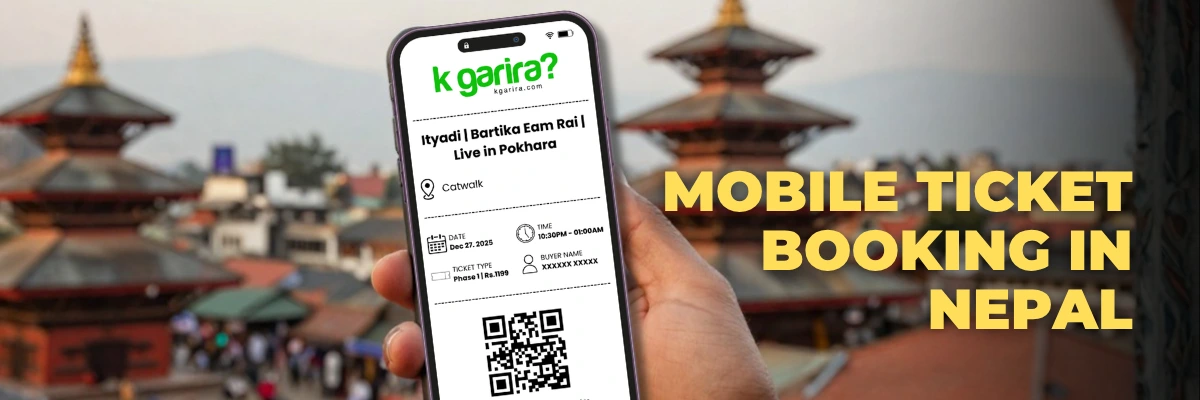
Nepal's event industry has spent the last several years running on a combination of social media announcements, WhatsApp forwards, physical ticket outlets in Kathmandu's commercial areas, and cash at the gate. This system works in the sense that events happen and people attend them. It does not work in the sense that organisers consistently know how many people are coming, where their revenue is at any point before the event, or whether the person at the gate is holding a genuine ticket.
The shift toward mobile app-based ticket booking in Nepal is not driven by a preference for technology. It is driven by the practical failures of the existing system, becoming expensive enough that organisers are motivated to find alternatives.
Quick Summary: Mobile App for Ticket Booking
- Mobile ticket booking is replacing traditional ticket sales across Nepal's event industry.
- Organisers gain real-time sales tracking, faster entry management, and better attendee data.
- QR code tickets reduce fraud, duplicate entries, and manual reconciliation issues.
- Integration with eSewa and Khalti makes ticket purchases quick and convenient.
- Mobile-first ticketing is becoming the standard for concerts, conferences, festivals, and community events in Nepal.
- Platforms like Kgarira help organisers streamline ticket sales, payments, and event operations from a single dashboard.
What the Current System Actually Costs Organisers
Before examining why mobile apps are gaining ground, it helps to be specific about what the current ticketing approach costs the people running events.
Revenue Uncertainty
An organiser selling tickets through physical outlets and cash-at-gate has no reliable picture of advance sales at any point before the event. Marketing decisions, catering quantities, staffing levels, and venue layout adjustments all happen on estimates rather than data. The estimate is frequently wrong in both directions.
Distribution Lag
Physical ticket outlets require a distribution network. The outlet in Thamel does not automatically reflect sales to the organiser in real time. Settlement happens after the event, which means the organiser is managing cash flow against an unknown figure until the dust settles.
Counterfeits
Physical tickets are reproducible. Duplicate tickets at the gate create entry disputes, headcount failures, and occasionally security situations that damage the event experience for legitimate attendees.
Geographic Reach
A buyer in Lalitpur who wants a ticket to an event in New Baneshwor needs to travel to a physical outlet or know someone who will buy on their behalf. The friction reduces conversion from interest to purchase, particularly for buyers who are not geographically close to the distribution network.
Post-event Reconciliation
Cash collected at multiple entry points across a venue produces reconciliation problems that take days to resolve. The total amount collected does not always match the number of entries recorded.
Why Mobile Specifically
The shift is happening on mobile rather than desktop for reasons that reflect how Nepal's internet-connected population actually behaves.
Smartphone penetration in Nepal's urban centres and increasingly in semi-urban areas has reached a level where mobile-first design is the correct assumption for any consumer-facing digital product. The majority of social media consumption, digital payment, and online communication in Nepal happens on a phone. An event discovered through a Facebook or Instagram post, researched on a phone, and attended by someone who primarily uses their phone for everything is a natural candidate for a mobile ticket purchase.
The payment infrastructure that makes mobile ticketing viable, eSewa and Khalti primarily, is itself mobile-first. Both platforms are used predominantly through their mobile apps. A ticketing platform that integrates with eSewa and Khalti sits inside the payment behaviour that a significant portion of Nepal's event-attending demographic already uses daily. The friction of a new purchase flow is minimal when the payment method is already familiar.
QR code entry validation, which is how mobile tickets are verified at the gate, requires only a smartphone with a camera on both ends. The organiser's gate staff use a phone to scan. The attendee presents their phone screen. No specialist hardware is required beyond what both parties already carry.
What Changes When You Move to App-Based Ticketing
The operational change is significant enough to affect how events are planned rather than just how tickets are sold.
Real-Time Sales Visibility
An organiser using a mobile ticketing platform sees sales data in real time from the moment tickets go live. The number of tickets sold, the revenue collected, the breakdown by ticket category if multiple tiers exist, and the demographic data where collected are all available on a dashboard that updates continuously.
This changes planning decisions. An event that has sold 60 per cent of its capacity a week out is in a different marketing position from one at 30 per cent. Catering quantities, security staffing, and equipment hire can all be adjusted against actual demand rather than estimates. These adjustments save money and reduce waste when demand is lower than projected, and prevent the operational failures that happen when demand exceeds what was planned for.
Attendee Communication
A ticketing platform with attendee contact data allows the organiser to communicate directly with confirmed ticket holders. Change of venue, time adjustment, supporting act announcement, weather contingency, parking information: all of these reach the people who have confirmed tickets directly rather than relying on social media posts that the algorithm may or may not surface to the right audience.
Entry Speed and Accuracy
QR code validation at entry is faster per person than manual ticket checking, cash handling, or physical stub collection. A gate handling 800 people over a 45-minute arrival window processes them faster with scanner validation than with any manual system. Entry count is recorded automatically and visible to the organiser in real time.
Data for the Next Event
The attendee data from a mobile ticketed event has value beyond the event itself. An organiser who runs a jazz evening in Kathmandu and collects verified contact information for 400 attendees has a direct marketing channel for the next event. The conversion rate from people who attended a previous event is meaningfully higher than cold outreach or social media advertising.
The Adoption Curve in Nepal
Nepal is not at the beginning of this shift. It is partway through it.
The segment of the event market that has moved most completely to digital ticketing is the corporate and conference category. Large conferences, product launches, and professional events in Kathmandu run on digital registration as standard. The attendee demographic is professional, digitally comfortable, and expects a registration link rather than a physical ticket outlet.
The concert and entertainment category is in transition. Major events in Kathmandu, particularly those featuring international artists or drawing audiences above a few hundred people, increasingly use digital ticketing alongside physical outlet distribution. The physical option persists for demographic coverage rather than because it is preferred by organisers.
The smaller event category, comedy nights, intimate concerts, gallery openings, and community gatherings, is where the most interesting adoption is happening. These events rarely have a distribution network for physical tickets to be practical. A digital-only approach suits their scale and the demographic they attract, which tends to be younger and mobile-first.
The festival and cultural event category is the most mixed. Large public festivals with government involvement often retain physical ticketing for accessibility reasons. Independent cultural events are adopting digital platforms faster.
What Still Needs to Improve
An honest assessment of mobile ticket booking in Nepal requires acknowledging where the infrastructure has not yet caught up with the potential.
Connectivity at Venues
QR code validation requires connectivity on the scanning device. Venues in Kathmandu's core have reliable mobile data. Some event venues outside the city centre or in semi-indoor configurations have connectivity gaps that create gate management problems. Offline validation modes in ticketing apps address this partially.
Digital Literacy
The demographic that attends large-scale events in Nepal is not uniformly mobile-first. Older attendees, guests from areas with lower smartphone penetration, and buyers who are not registered on eSewa or Khalti represent a segment that mobile-only ticketing does not serve well. Hybrid approaches that maintain a limited physical option remain relevant for events with a broad demographic reach.
Platform Trust
Nepal's digital payment market is still building the consumer trust that makes unfamiliar platforms easy to adopt. Buyers who know eSewa and Khalti will use them without hesitation. A ticketing platform asking for payment through an interface they have not used before encounters more resistance than the same transaction on a familiar payment app.
Internet Reach
Events in Pokhara, Chitwan, and other regional centres have access to a growing mobile-first demographic, but rural areas remain underserved by the infrastructure that makes mobile ticketing seamless.
Kgarira Mobile App: Buy Tickets and Book Venues from your own Mobile Devices
Want to buy tickets or book a venue without opening a browser, Kgarira Mobile App got you covered. Now buy tickets to latest events, festivals, concerts, and more from your own mobile devices using Kgarira Mobile App. Book venues to organize your event directly from the App easily.
The Kgarira Mobile App is available on both Play Store and App Store. Install the Mobile App and find latest events happening around you today.


Where This Goes
The trajectory is clear, even if the timeline is not. Mobile app-based ticket booking in Nepal is moving from a progressive option to the standard approach for the event categories where it already works well. The infrastructure, payment rails, smartphone penetration, and organisers' appetite for better data are all pointing in the same direction.
The events that will move last are not those where technology is unsuitable. They are those where cultural considerations around access and inclusion make a purely digital approach an incomplete solution for the specific audience. Those events will likely settle on hybrid models rather than fully digital or fully physical.
Kgarira.com provides mobile-first ticketing infrastructure for Nepal's event market, with eSewa and Khalti payment integration, QR-based entry validation, and real-time sales dashboards. Visit kgarira.com for the full platform overview.
FAQs
1. Is there a reliable ticket booking app in Nepal for events?
The market has several options at different stages of development. Kgarira.com provides mobile-first ticketing for Nepal's event market with local payment gateway integration and QR entry validation. The platform handles concert, conference, and festival ticketing with real-time sales visibility for organisers and a straightforward purchase flow for buyers using eSewa or Khalti.
2. Can I buy event tickets in Nepal using eSewa or Khalti?
Yes, on platforms that have integrated these payment gateways. eSewa and Khalti are the primary digital payment methods in Nepal's consumer market, and any ticketing platform targeting the Nepal market should support both. Kgarira integrates both alongside bank transfer options for buyers who prefer direct payment.
3. How does QR code entry validation work at events in Nepal?
When a buyer purchases a ticket through a mobile platform, they receive a confirmation with a unique QR code, either in their email or accessible through the platform. At the event entry, gate staff scan the QR code using the platform's validation app on a smartphone. The system confirms the ticket, marks it as used, and prevents duplicate scanning. The organiser sees a live entry count through the dashboard.
4. Do mobile ticketing platforms work for smaller events in Nepal?
Mobile ticketing is often more practical for smaller events than for large ones, because smaller events rarely have the distribution network to make physical ticket outlets viable. A 150-seat comedy night or an intimate concert is well-suited to a digital-only ticketing approach where all buyers are directed to a purchase link, and entry is managed by a single scanner at the door.
5. What happens if an attendee does not have their QR code at the event entry?
Most platforms, including Kgarira, allow gate staff to look up an attendee by name, phone number, or email in the backend system and validate entry manually. This covers the scenario where a buyer cannot locate their confirmation or does not have data connectivity at the venue. The lookup adds a few seconds per person but ensures that legitimate ticket holders are not turned away due to a technical issue on the buyer's end.
Share this post
K Garira